
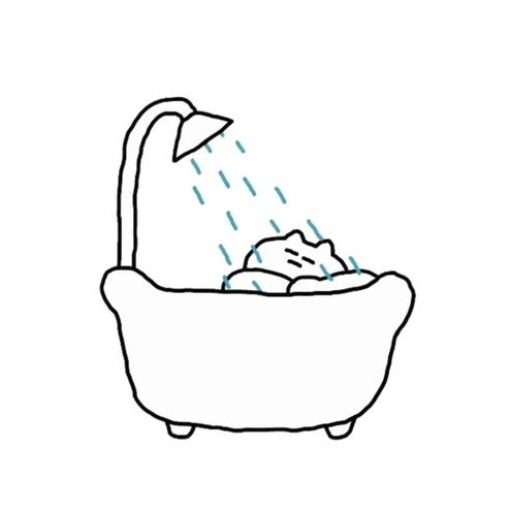
Just one more episode, and I will start studying. Poof! Guess what? That one episode turned into watching the entire series.
Sounds familiar?
Well, that’s procrastination, “the action of delaying or postponing something” (Oxford Language). We often procrastinate by pushing back on the task that needs to be done. If that’s you, you’re not alone.
But what exactly causes it, and how can we stop procrastinating?
What Causes Procrastination?
We often assume that we procrastinate just because of laziness. This assumption is not wrong. Still, many psychological and cognitive factors contribute to your laziness. First and foremost, we tend to procrastinate because we do not enjoy performing that task and therefore are not motivated.
Our brain works toward a reward and is more attracted to getting an instant reward. This can be called the present bias. Knowing a task would provide an instant reward motivates us more. We are more motivated to work toward that goal rather than performing a long-term task. Present bias can also explain why we would finish the easy assignment first then move on with the hard ones.
Another psychological response that contributes to procrastination is called temporal discounting. Temporal discounting is similar to present bias but give us a reason why we are stimulated by immediate rewards. The study by Ainslie shows how we put greater value in the immediate rewards.
Additionally, researchers have linked procrastination with perfectionism.
Researchers have claimed that perfectionists procrastinate with the fear of not performing up to their standards.
This claim presents an interesting twist. We would typically think perfectionists to be on the ball. Furthermore, the word procrastination is not a trait that we would usually link to perfectionism. Overall, the causes of procrastination reveal how the majority of people experience procrastination.
How Can We Stop Procrastinating?
A good news is that a study has shown people would procrastinate less as they age. But that does not mean we would stop procrastinating.
Here are some of my own personal tips on overcoming procrastination.
- Start studying for just 5 minutes: This is a method I use to form motivation. When I really focus on the task for 5 minutes, I stay focused the whole time. This focused period allows me to study for multiple hours.
- View a motivation video: I like to watch a short productive day in my life video which helps me compare myself to others and work on the task.
- Lock your phone: I would throw my phone away in the living room helping me to get on track quickly.
Citations
Ainslie, G. (1975). Specious reward: A behavioral theory of impulsiveness and impulse control. Psychological Bulletin, 82(4), 463–496. doi:10.1037/h0076860
Bisin A, Hyndman K. Present-bias, procrastination and deadlines in a field experiment. Games and Economic Behavior. 2020;119:339-357. doi:10.1016/j.geb.2019.11.010
Sirois, F. M., & Pychyl, T. A. (2013). Procrastination and the priority of short-term mood regulation: Consequences for future self. Social and Personality Psychology Compass, 7(2), 115-127. doi:10.1111/spc3.12011
Oxford Languages. (n.d.). Oxford English Dictionary (3rd ed.). Oxford University Press. https://www.oed.com







Leave a Reply