
If we look at the list of the world’s best inventions, we can see that creativity has allowed us to enjoy an innovative life. Without these creative inventions, we could not imagine living as we do today (e.g., phones, light bulbs, refrigerators). Yet, many people are unaware of the importance of creativity. Creativity allows us to think and see from different perspectives. Throughout history, creativity has shaped the world we currently live in.
Many people might think creativity forms when we are in need of a solution, when we are put in an urgent situation. But what if I told you that creativity actually forms when you are mind wandering? It happens during times when you are not doing anything specific. The formation of a creative thought involves three key brain networks: the default mode network, the salience network, and the executive control network. Let us focus on the default mode network (DMN).
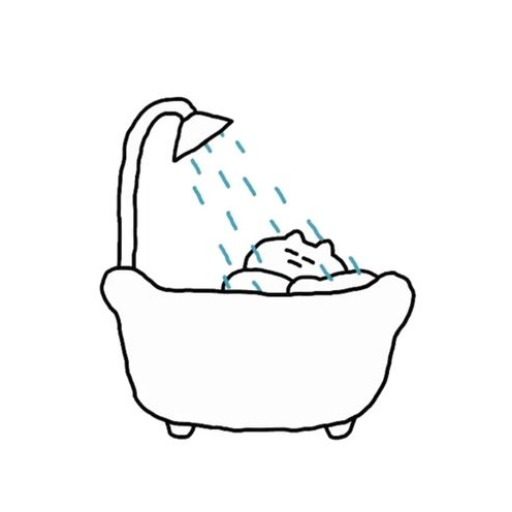
The default mode network (DMN) is a network of brain regions that becomes active when the brain is at rest. Activities such as mind wandering, daydreaming, zoning out, and showering activate the DMN. When the DMN is active, cognitive functions such as creativity form.
So next time you feel guilty about not doing anything, remember that this is part of the process of forming a creative thought that could change the world!
Citations
- Baird, B., Smallwood, J., Mrazek, M. D., Kam, J. W., Franklin, M. S., & Schooler, J. W. (2012). Inspired by distraction: Mind wandering facilitates creative incubation. Psychological science, 23(10), 1117-1122.
- Raichle, Marcus E., ‘Creativity and the Brain’s Default Mode Network’, in Suzanne Nalbantian, and Paul M. Matthews (eds), Secrets of Creativity: What Neuroscience, the Arts, and Our Minds Reveal (New York, 2019; online edn, Oxford Academic, 19 Sept. 2019), https://doi.org/10.1093/oso/9780190462321.003.0006, accessed 27 June 2024.
- Shofty, B., Gonen, T., Bergmann, E. et al. The default network is causally linked to creative thinking. Mol Psychiatry 27, 1848–1854 (2022). https://doi.org/10.1038/s41380-021-01403-8







Leave a Reply