
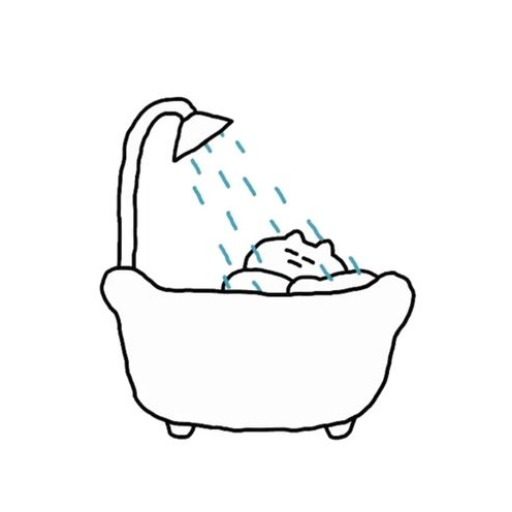
How do you differentiate a friend and a best friend? What makes you describe one differently from the other? For me, a best friend is someone you can trust with your life—someone who has seen both the best and worst of you and stands by your side no matter what. A person who you are so connected with that can freely share inner thoughts.
I recently watched a TED Talk by Brené Brown talking on “The power of vulnerability”. I wanted the answers of what makes me feel connected and trusting toward a certain someone. I wanted to know the difference of bonding between my friends and my best friend. The TED Talk answered my interest in understanding the connection of close relationships.
Vulnerability. The concept of vulnerability is often viewed with a negative connotation. According to the Cambridge Dictionary, vulnerability is defined as “the quality or state of being exposed to the possibility of being attacked or harmed, either physically or emotionally.” But psychology and researcher Brené Brown sees it differently. They see Vulnerability as a key tool for building relationships. We, as humans, form connections when we openly share our emotions, admit to our mistakes, and allow ourselves to be seen in an honest way. We are often too scared of being imperfect and try to show only the good side of who we are. I would repeat the words of “I am not good enough” in the fear of my friends and society rejecting me.
But it is okay to have fear, shame and the emotion of “I am not good enough”. That is just the way our brain copes. Our anxiety tends to evaluate both the best and worst-case scenarios in relationships, leading us to hide our true selves to avoid possible rejection or discomfort. Such cognitive distortion like catastrophizing makes us expect the worst.
But one thing that anxiety doesn’t account for is that embracing our imperfections and allowing ourselves to be vulnerable can actually ease our fears. Vulnerability is the solution for anxiety. Anxiety views vulnerability as allowing ourselves to be attacked as if walking around with a naked body but when we allow ourselves to be seen and share our authentic selves, we create deeper bonds with others.
If there is one crucial lesson to learn from your teens, it’s the value of vulnerability. Vulnerability allows us to be true to ourselves, have courage and leads us to joyful friendships that can last your lifetime. By being open and authentic, we not only strengthen our connections with others but also take important steps toward taking care of our own emotional well-being.
Citations
Brown, Brené. The Power of Vulnerability. TED, June 2012, www.youtube.com/watch?v=iCvmsMzlF7o&t=590s.
Hippe, Hannah. “The Benefits of Vulnerability.” Psychiatric Associates, 29 Dec. 2022, psychassociates.net/the-benefits-of-vulnerability/.
Picture from @hipdict on instagram.






Leave a Reply